
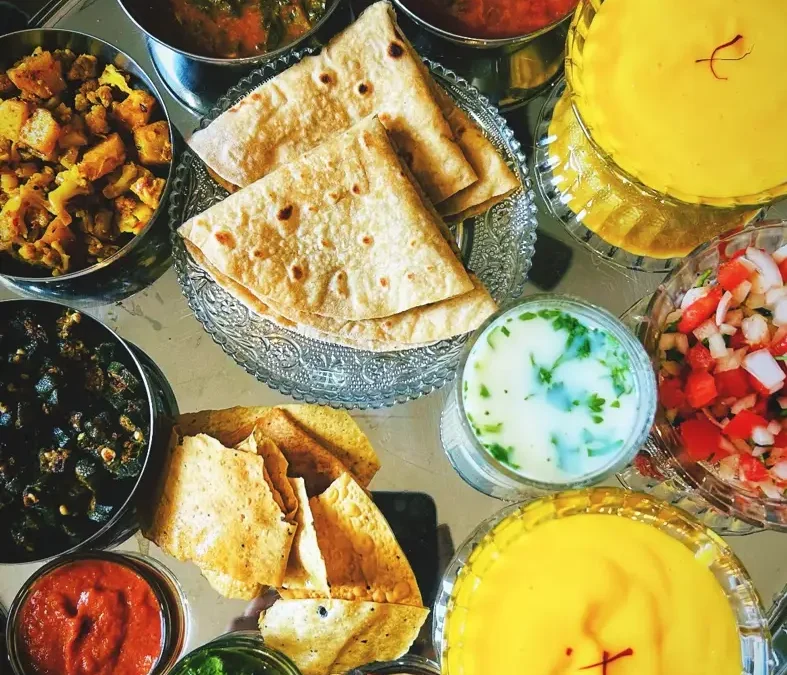
Featured image: INDIAN thali.jpg by Shubhanshri01, CC BY-SA 4.0, via Wikimedia Commons
Key points
- The 2024 ICMR-NIN guidelines advise against relying on protein supplements and caution that high intakes over long periods may carry risks.
- Add a bowl of dal to lunch and dinner, choose besan chilla or moong dosa for breakfast, snack on roasted chana or peanuts, and add curd to meals.
Can vegetarians get enough protein?
Yes, with planning. Pulses, milk and curd, paneer, soya, nuts, seeds and whole grains all contribute. Combining cereals with pulses, as in dal-chawal, khichdi or idli, improves protein quality because the two complement each other’s amino acids. The ICMR-NIN guidelines recommend this combination.
Good sources
- Pulses and legumes: dals, rajma, chana, lobia, moong sprouts.
- Dairy: milk, curd, paneer, buttermilk.
- Soya: soya chunks, tofu.
- Nuts and seeds: peanuts, almonds, sesame, flax.
- Millets and whole wheat.
Protein powders
The 2024 ICMR-NIN guidelines advise against relying on protein supplements and caution that high intakes over long periods may carry risks. For most people a varied diet is enough. Athletes and people with medical needs should speak to a registered dietitian.
Easy upgrades
Add a bowl of dal to lunch and dinner, choose besan chilla or moong dosa for breakfast, snack on roasted chana or peanuts, and add curd to meals.
As of October 2026. Rules, prices and shop details change. Check the sources below before you rely on them.
Related reading
- ICMR-NIN Dietary Guidelines for Indians 2024: the 17 guidelines explained simply
- Millets in the Indian diet: jowar, bajra, ragi and more, and how to cook them
- How to cut salt in Indian cooking without losing flavour
Frequently asked questions
Why combine dal and rice?
Cereals and pulses complement each other’s amino acids, improving protein quality.
Do I need protein powder?
Most people do not; ICMR-NIN favours food sources.