
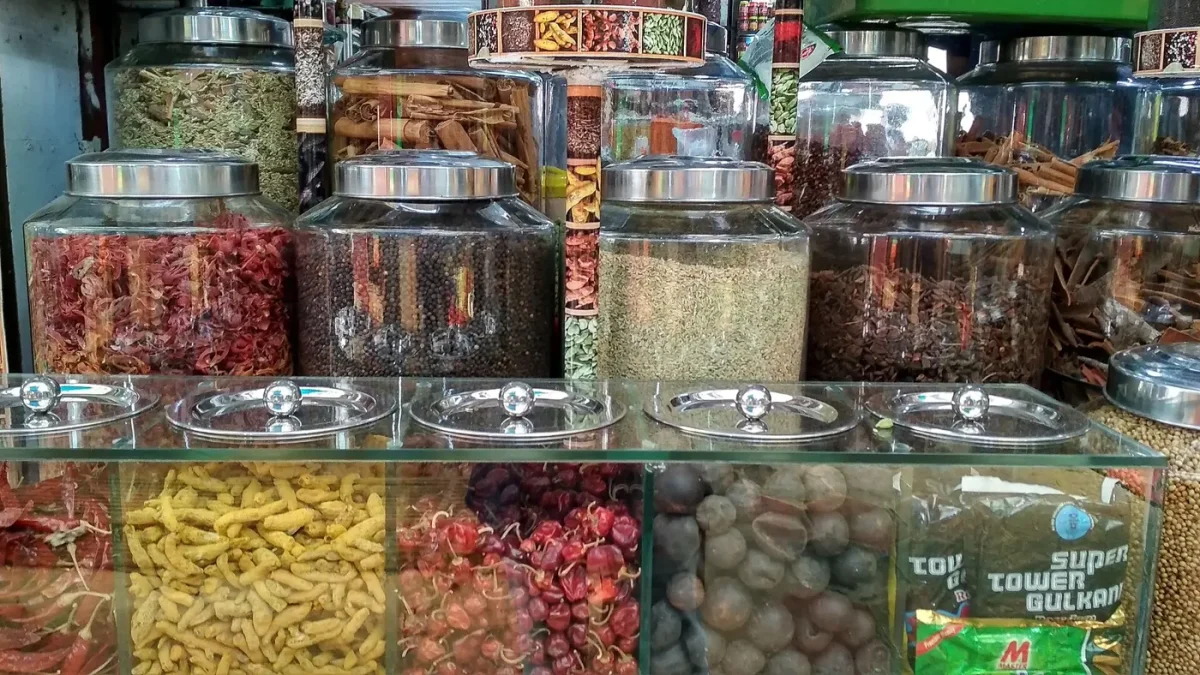
Featured image: Indian spices,palayam market,thiruvananthapuram,kerala.jpg by Indurema, CC BY-SA 4.0, via Wikimedia Commons
Key points
- In Indian diets salt comes not only from cooking but from pickles, papads, namkeen, chutneys, sauces, instant noodles, bread and restaurant food.
- Our preference for salt adjusts over a few weeks of eating less.
Why salt matters
The World Health Organization recommends that adults eat less than 5 g of salt a day (just under a teaspoon). High sodium intake raises blood pressure, a major risk factor for heart disease and stroke. WHO estimates that most people worldwide eat roughly double that amount.
Where the salt hides
In Indian diets salt comes not only from cooking but from pickles, papads, namkeen, chutneys, sauces, instant noodles, bread and restaurant food. Packaged snacks often carry a large share of a day’s sodium in a single pack.
Practical swaps
- Season with lemon, amchur, kokum, tamarind, fresh herbs, ginger and roasted cumin.
- Add salt at the end of cooking, when you can taste it properly.
- Keep the salt shaker off the dining table.
- Treat pickles and papad as occasional.
- Read sodium on labels and compare brands.
Taste adapts
Our preference for salt adjusts over a few weeks of eating less. Reduce gradually and most families do not notice.
As of October 2026. Rules, prices and shop details change. Check the sources below before you rely on them.
Related reading
- ICMR-NIN Dietary Guidelines for Indians 2024: the 17 guidelines explained simply
- Millets in the Indian diet: jowar, bajra, ragi and more, and how to cook them
- Protein for Indian vegetarians: dal, paneer, soya and the food-first approach
Frequently asked questions
How much salt should an adult eat?
WHO recommends less than 5 g a day.
Is rock salt or black salt healthier?
They contain sodium too; the total amount matters most.