
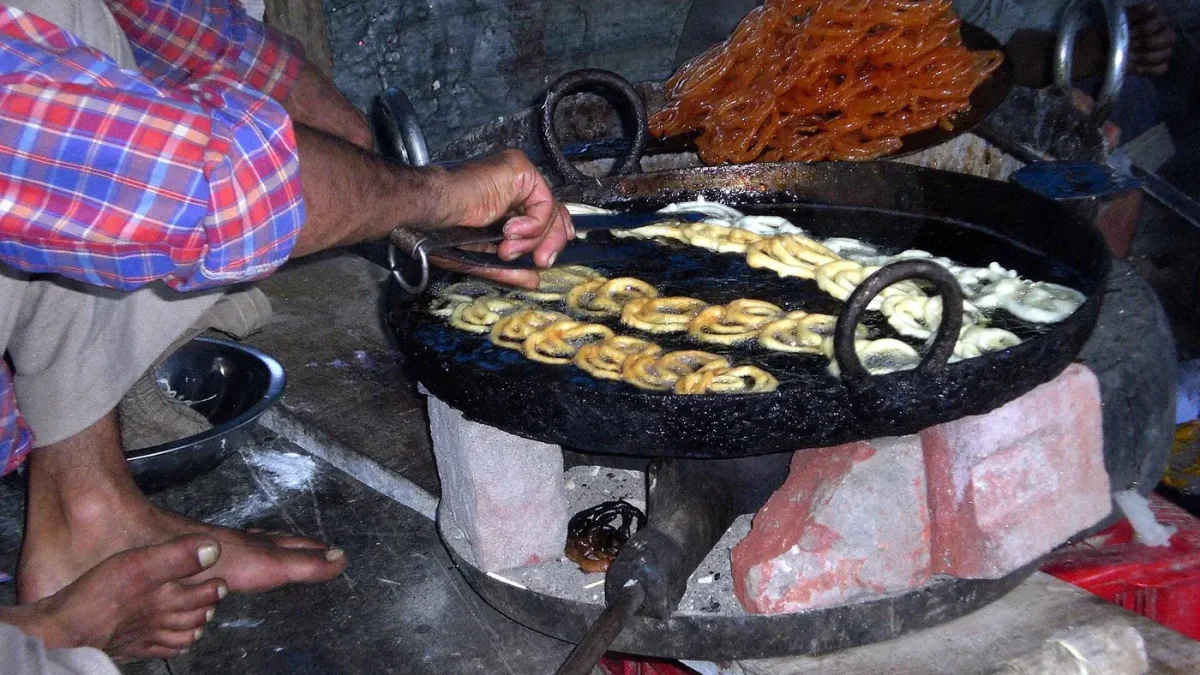
Featured image: Jalebi frying india.jpg by Kondephy, CC BY-SA 3.0, via Wikimedia Commons
Key points
- FSSAI capped industrial trans fat at 2% of total fat in oils and fats from January 2022, and extended the limit to foods containing them.
- Avoid reusing frying oil many times.
- Check the nutrition panel for trans fat, and the ingredient list for ‘partially hydrogenated’ oils or ‘vanaspati’.
What trans fats are
Industrially produced trans fats form when vegetable oils are partially hydrogenated, as in vanaspati. They raise LDL cholesterol and the risk of heart disease. Repeated reheating of frying oil also degrades it.
India’s limit
FSSAI capped industrial trans fat at 2% of total fat in oils and fats from January 2022, and extended the limit to foods containing them. In 2023 WHO recognised India among the countries with best-practice policies on trans fat elimination.
At home and on the street
Avoid reusing frying oil many times. FSSAI’s Repurpose Used Cooking Oil (RUCO) initiative collects used oil from businesses for biodiesel. At home, prefer shallow frying and use vanaspati rarely.
Reading labels
Check the nutrition panel for trans fat, and the ingredient list for ‘partially hydrogenated’ oils or ‘vanaspati’.
As of October 2026. Rules, prices and shop details change. Check the sources below before you rely on them.
Related reading
- ICMR-NIN Dietary Guidelines for Indians 2024: the 17 guidelines explained simply
- Millets in the Indian diet: jowar, bajra, ragi and more, and how to cook them
- How to cut salt in Indian cooking without losing flavour
Frequently asked questions
What is the trans fat limit in India?
2% of total fat, under FSSAI regulations from 2022.
What is RUCO?
FSSAI’s Repurpose Used Cooking Oil initiative.